:CueCat was a free cat-shaped barcode scanner that linked US print and products to the web in 2000.
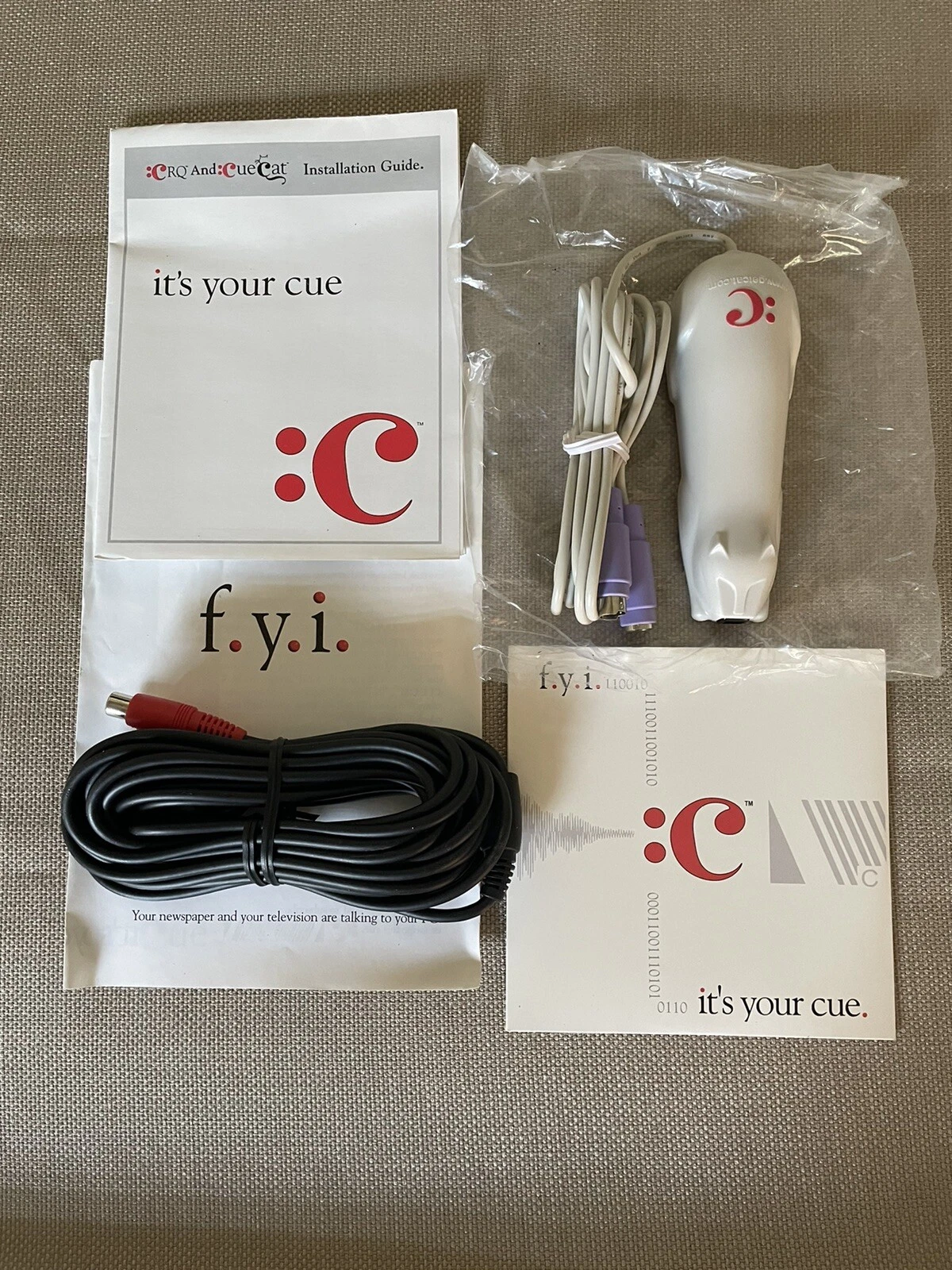
Readers swiped printed cues or supported barcodes beneath the wired scanner. Digital:Convergence’s Windows :CRQ software contacted a central database, matched the code to a selected destination and opened it in a web browser.
After financing dried up, the company made mass layoffs and entered maintenance mode in 06/2001; its central lookup database was offline during 2002.
History
Readers swiped printed cues or supported barcodes beneath the wired scanner. Digital:Convergence’s Windows :CRQ software contacted a central database, matched the code to a selected destination and opened it in a web browser.
History
After financing dried up, the company made mass layoffs and entered maintenance mode in 06/2001; its central lookup database was offline during 2002.
Significance
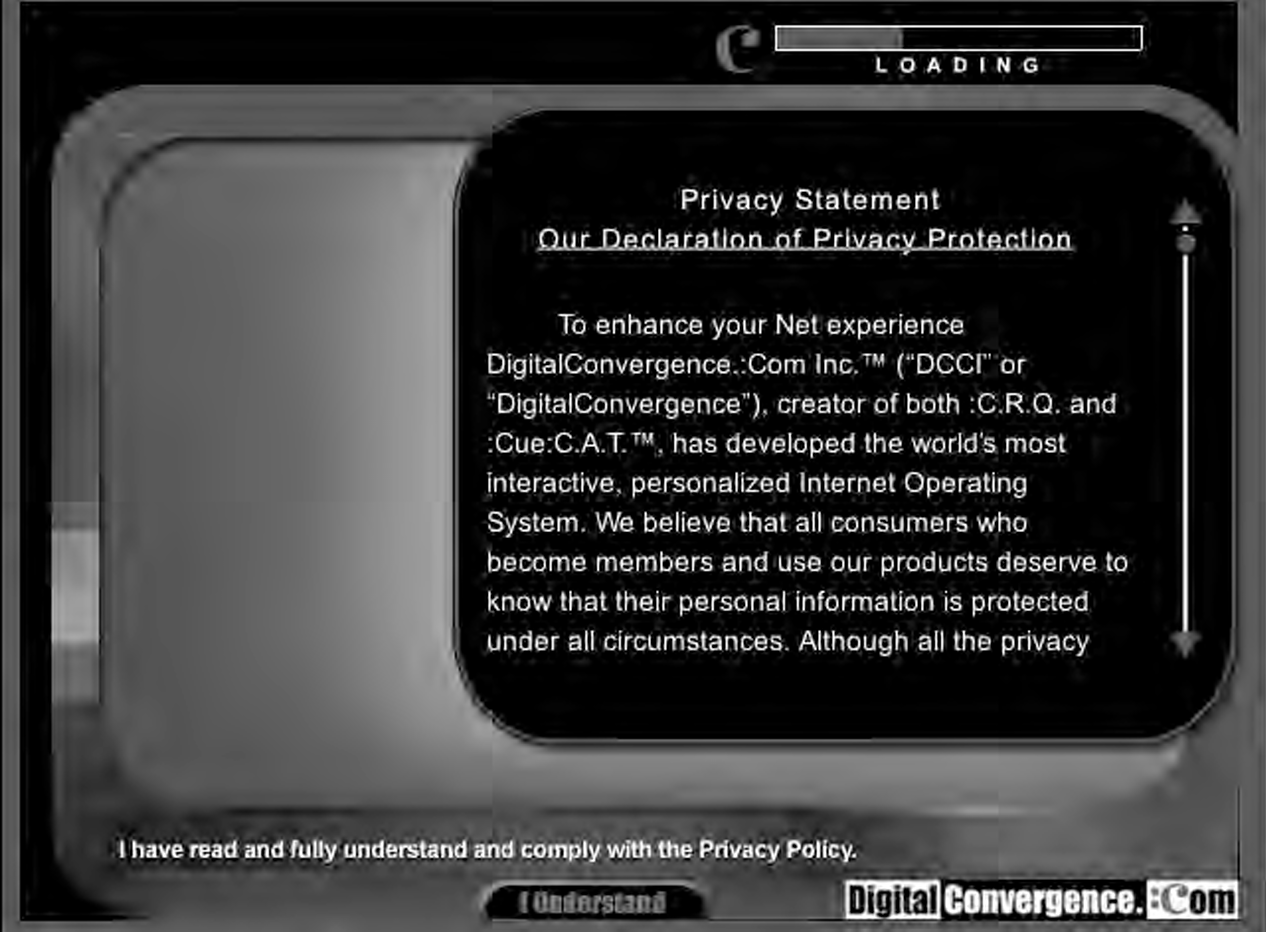
Free distribution put barcode scanners into homes, but using one required a connected PC, installed software, registration and a central lookup service—often more effort than typing an address or searching. The transmitted identifiers made scan histories technically possible and prompted an early dispute over tracking and disclosure.
When programmers decoded and modified the scanners for inventories and personal databases, they also showed how freely distributed hardware could outlive the closed service it was built to support.
Scanner and Cue Architecture
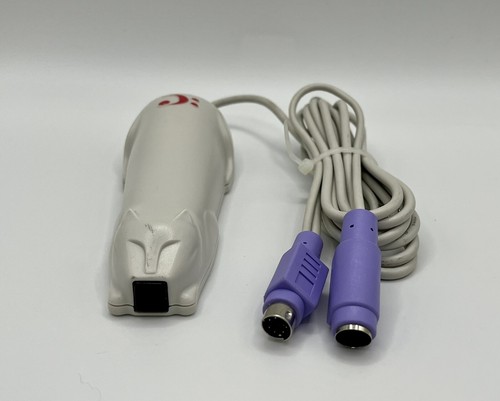
- Most early consumer units used a PS/2 keyboard-wedge connection, while USB versions also existed.
- :CueCat output included an encoded device identifier, a barcode-type field and the scanned payload, presented to the computer as keyboard input.
- The scanner supported proprietary print cues and conventional linear codes including UPCs and ISBNs.
- The broader system could also process encoded television or radio audio cues when the media source was connected to the PC.
Rollout and Distribution
- Digital:Convergence was incorporated in Delaware in 09/1998 and began its nationwide US consumer rollout in 08/2000.
- Forbes mailed approximately 810,000 packages with its 09/2000 issue, while approximately 400,000 were planned for Wired’s 10/2000 issue.
- RadioShack offered free scanners and :CRQ software discs through more than 7,000 US stores.
- The SEC filing’s plan to purchase and distribute approximately ten million units by the end of 2000 was forward-looking, not a completed manufacturing total.
Privacy, Modification and Shutdown
- On 22/09/2000, the Privacy Foundation called for clearer disclosure and for identifier-related tracking features to be disabled.
- A separate 09/2000 breach exposed personal data relating to 147,836 customers, according to Digital:Convergence’s SEC filing.
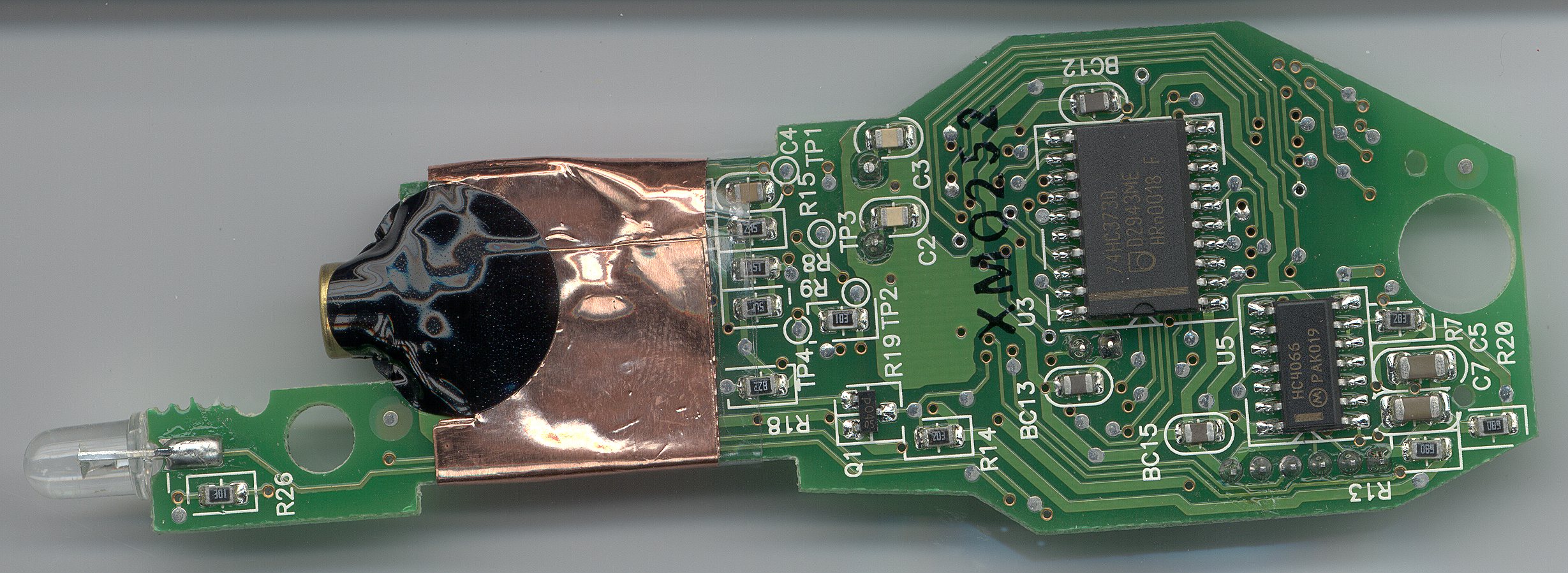
- Programmers produced independent Linux, Java and Windows tools, while hardware experimenters developed the modification commonly called “declawing”.
- Mass layoffs followed in 06/2001. The website disappeared and the central lookup database was offline during 2002.
Key facts
**Region:** United States
**Associated With:** Digital:Convergence Corporation - developer and service operator
**Defining Feature:** Free cat-shaped barcode scanner linking printed codes to selected websites
**Status:** Defunct - original central lookup service no longer operates
Region
United States
Associated With
Digital:Convergence Corporation - developer and service operator
Defining Feature
Free cat-shaped barcode scanner linking printed codes to selected websites
Status
Defunct - original central lookup service no longer operates
Images are included for historical and archival reference.
Rights holders may contact Forgotten Archive through the publishing account to request a credit correction or removal.
Displayed for commentary, criticism, research and historical documentation where permitted by applicable law. No permission for reuse is granted.
Caption
Inside a CueCat scanner. Users quickly developed hardware and software modifications that repurposed the free devices as general-purpose barcode readers.